A smile has always been more than a collection of teeth. It can influence how people communicate, express emotion and present themselves to the world. Yet designing a smile that looks natural and functions comfortably has traditionally depended heavily on clinical experience, physical impressions and a patient’s ability to imagine the final result. Today, technology is changing that process. Across modern Australian dentistry, digital smile design is helping transform smile planning from an abstract conversation into a more visual, measurable and collaborative experience.
The significance of this shift extends beyond cosmetic dentistry. Digital technologies can bring together photography, digital scans, facial analysis and computer-based planning to help clinicians understand how teeth relate to the wider structure of a patient’s face. Instead of considering individual teeth in isolation, dentists can evaluate the smile as part of a complete facial composition.
From Imagination to Visualisation
A New Era of Smile Planning is transforming the way modern dentistry approaches the design of a confident, natural-looking smile. Rather than relying solely on traditional impressions and clinical measurements, digital smile design brings advanced imaging, digital analysis and visual planning together to create a more personalised treatment experience. Patients can gain a clearer understanding of how potential changes may complement their facial features, while dentists can assess proportions, symmetry and aesthetics with greater precision before treatment begins. As technology continues to evolve, digital smile design is helping make smile planning more collaborative, predictable and tailored to the individual, creating a thoughtful bridge between clinical expertise and the unique character of every smile.
One of the most challenging aspects of cosmetic dental treatment has always been communication. A dentist may understand precisely what a proposed restoration, veneer or orthodontic adjustment could achieve, while a patient may struggle to visualise the outcome.
Digital planning can bridge that gap.
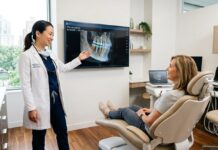
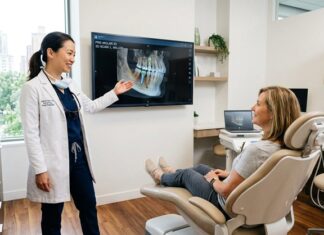
Using high-resolution photographs and digital impressions, clinicians can create a detailed representation of the patient’s existing smile. Depending on the technology and clinical workflow used, this information can then support the planning of proposed changes to tooth proportions, alignment, symmetry and overall appearance.
This does not mean that software independently decides what a patient’s smile should look like. Rather, technology gives the dentist additional information with which to plan treatment, while the patient has a clearer opportunity to participate in the discussion.
That distinction is important. Precision in dentistry is not simply about making measurements more exact. It is about using better information to make treatment decisions more considered and individualised.
The Face Behind the Smile
A visually appealing smile is rarely determined by tooth shape alone. The relationship between teeth, lips, gums, facial proportions and natural expression can influence how a smile appears.
This is where digital smile planning can become particularly valuable.
A computer-assisted workflow allows clinicians to examine the relationship between proposed dental changes and the patient’s facial features. For example, the apparent length of teeth can be influenced by lip position, while the perceived symmetry of a smile can be affected by the surrounding facial structure.
Digital analysis can therefore encourage a broader perspective: instead of asking simply, What should these teeth look like?, the planning process can consider, How should these teeth interact with this person’s face?
For Australian patients considering cosmetic or restorative treatment, that more holistic approach may be particularly meaningful. The objective is not necessarily to create a perfectly uniform smile, but to develop an outcome that feels proportionate, functional and natural.
Greater Precision Through Digital Workflows
Modern dentistry increasingly relies on digital tools at multiple stages of treatment. Intraoral scanners can capture detailed three-dimensional information without relying exclusively on conventional impression materials. Digital photographs can document facial characteristics and tooth appearance. Computer-aided design can help clinicians and dental laboratories plan restorations with considerable detail.
When these technologies are integrated into a coherent workflow, the result can be a more connected treatment-planning process.
Digital records can also make it easier to communicate information between dentists, specialists, dental technicians and patients. Instead of relying entirely on physical models and written instructions, members of the dental team may be able to work from shared digital information.
This can be especially useful for complex cases involving several procedures. Whether the treatment involves veneers, crowns, orthodontics, implants or a combination of restorative techniques, careful sequencing can help ensure that each stage contributes to the broader treatment objective.
Personalisation Over Perfection
One of the most interesting developments in modern cosmetic dentistry is the movement away from a single definition of the perfect smile.
Teeth do not need to look identical to one another to appear attractive. Natural smiles contain subtle variations in shape, translucency, texture and alignment. Excessive uniformity can sometimes make restorations appear artificial.
Digital planning can support personalisation by allowing clinicians to examine different design possibilities before treatment begins. Patients can discuss preferences regarding tooth shape, proportions and overall appearance rather than simply accepting a predetermined template.
This collaborative approach recognises an important truth: a smile belongs to the individual.
For many people, their smile has become an essential part of personal style. Just as clothing, hairstyle and other forms of self-expression can communicate personality, the appearance of the smile can contribute to how someone feels about their overall presentation.
Technology Still Needs Human Judgement
Despite its sophistication, technology does not replace clinical expertise.
A digital simulation represents a planning tool rather than a guarantee of the final clinical result. Biological factors, tooth structure, gum health, bite relationships and individual healing responses can all influence treatment outcomes. A digitally attractive proposal must still be clinically appropriate.
This is why the dentist remains central to the process.
Experienced clinicians must interpret digital information, identify limitations, assess oral health and determine whether a proposed treatment is suitable. In some cases, preserving healthy tooth structure or improving oral health may take priority over achieving a particular cosmetic appearance.
The most effective digital workflow is therefore not technology for technology’s sake. It is technology guided by sound clinical reasoning.
The Future of Australian Oral Care
As digital dentistry continues to develop, smile planning is likely to become increasingly integrated with other technologies, including three-dimensional imaging, CAD/CAM manufacturing, computer-guided procedures and advanced dental laboratory workflows.
The broader transformation is not simply about replacing analogue tools with digital ones. It represents a change in how dentists and patients communicate, plan and make decisions together.
For Australian oral care, this evolution offers an opportunity to make treatment planning more transparent, visual and personalised. Digital smile design can provide a bridge between clinical precision and individual expression, helping transform the question of What can dentistry change? into a more thoughtful conversation about What should dentistry achieve for this person?
Ultimately, the future of smile planning may not be defined by how perfectly technology can design a smile, but by how intelligently it can help dentists and patients create one that belongs naturally to the person wearing it.sisim